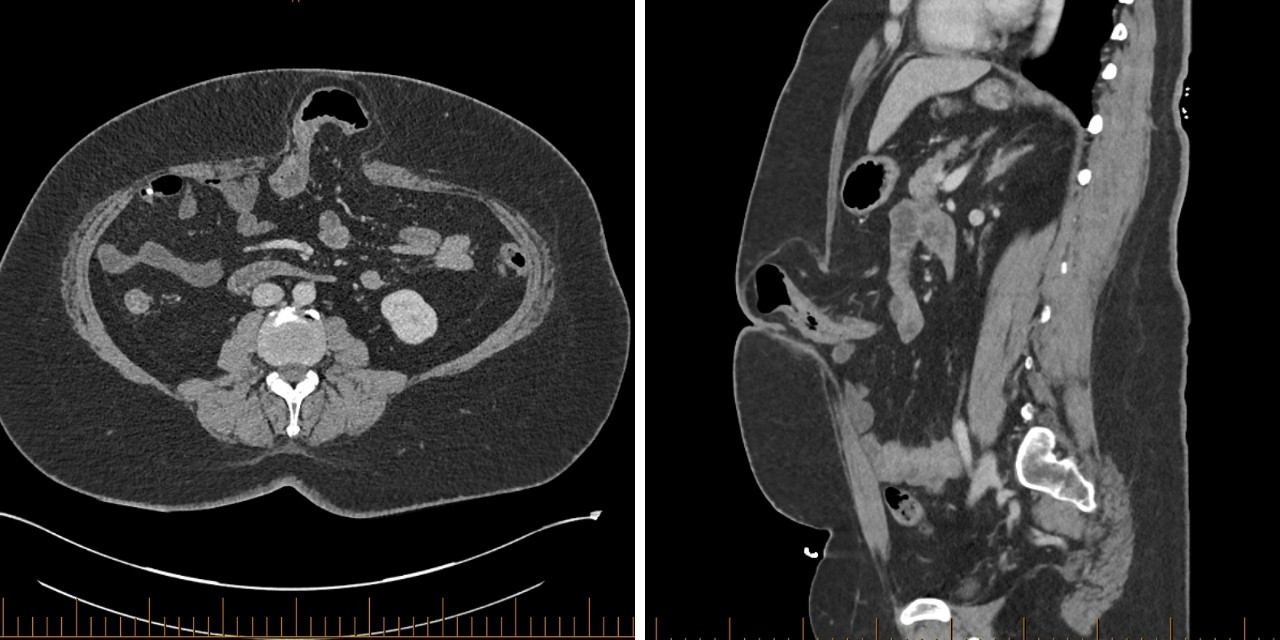
Why Hernia Outcomes Need More Than a 6-Week Check-Up

Hernia repair is one of the most commonly performed operations worldwide, and in Australia alone, over 90,000 hernia repairs are performed each year. But what matters most to patients is not just the absence of complications - it’s whether they feel better.

SurgicalPerformance

4

min read

13 Jan 2026

Insights

News

Hernia surgery is a unique part of surgical practice. It is rarely lifesaving, unlike cancer surgery, but it is deeply tied to restoring a patient’s comfort, function and quality of life. Many patients present with straightforward hernias, while others are referred because of complexity: recurrent hernias, large abdominal wall defects or prior failed repairs. And yet, regardless of complexity, what these patients want most is to feel “normal” again.

As surgeons, we all know that collecting outcomes data sounds simple in theory but can be a painful, time-consuming and easily neglected task in reality. Entering cases, keeping track of follow-up and consolidating outcomes can feel like another administrative burden added to an already overloaded day. This is exactly where technology should be helping us, not becoming another bloody chore.

Why Functional Outcomes Matter as Much as Clinical Outcomes

Hernia repair is one of the most commonly performed operations worldwide, and in Australia alone, over 90,000 hernia repairs are performed each year1

But what matters most to patients is not just the absence of complications - it’s whether they feel better.

Research consistently shows that functional, patient-reported outcomes (pain, discomfort, activity limitations and overall wellbeing) are often more meaningful to patients than purely clinical indicators2.

“One of the worst things you can do as a doctor is to abandon a patient”.

Many patients recover beautifully and are grateful for the improvement in their daily life. But sometimes, patients don’t do as well as expected. And if surgeons aren’t aware of their postoperative experience, we lose the opportunity to intervene early and learn from our results.

It’s human nature to avoid difficult situations. Some surgeons understandably feel reluctant to engage with dissatisfied patients when no clear surgical solution exists. But attributing persistent symptoms to “psychological factors” does not help these patients and doesn’t help us understand the full scope of outcomes after hernia repair.

The default approach becomes familiar:

Perform the repair → see them at 6 weeks → if they're not 100%, hope things settle → discharge.

But this model leaves significant blind spots.

What We Lose When We Don’t Track Patient Outcomes

Without structured follow-up, surgeons miss critical insights:

  • How many patients are truly satisfied postoperatively?

  • How many continue to experience pain, discomfort, or functional limitations?

  • Despite a complication-free course, how many patients still rate their improvement as poor or only moderate?

Studies suggest that chronic postoperative pain affects around 10–12% of patients after inguinal hernia repair, even in the modern mesh era3 4.

In practical terms, this means that each year in Australia alone, 5,000 patients continue to experience chronic groin pain after inguinal hernia repair—despite technically successful surgery, highlighting the importance of tracking outcomes beyond the traditional snapshot of a single clinic visit.

SurgicalPerformance: A Platform Built by Surgeons, for Surgeons

SurgicalPerformance is not a registry. There is:

  • no college or society governing it

  • no reporting mandates

  • no hierarchy

  • no consequences for poor outcomes

  • no obligation to participate

Just a simple mission: to give surgeons a private, supportive, data-driven way to understand their outcomes and learn from their own experience.

SurgicalPerformance is a community of surgeons who believe that outcomes tracking should be useful, not punitive.

Purpose-Built PROMs for Hernia Surgery

To support surgeons who perform hernia repairs, SurgicalPerformance, through collaboration with expert general surgeons, has incorporated validated and hernia-specific Patient-Reported Outcome Measures (PROMs) that are automatically delivered to patients at the right intervals.

These include:

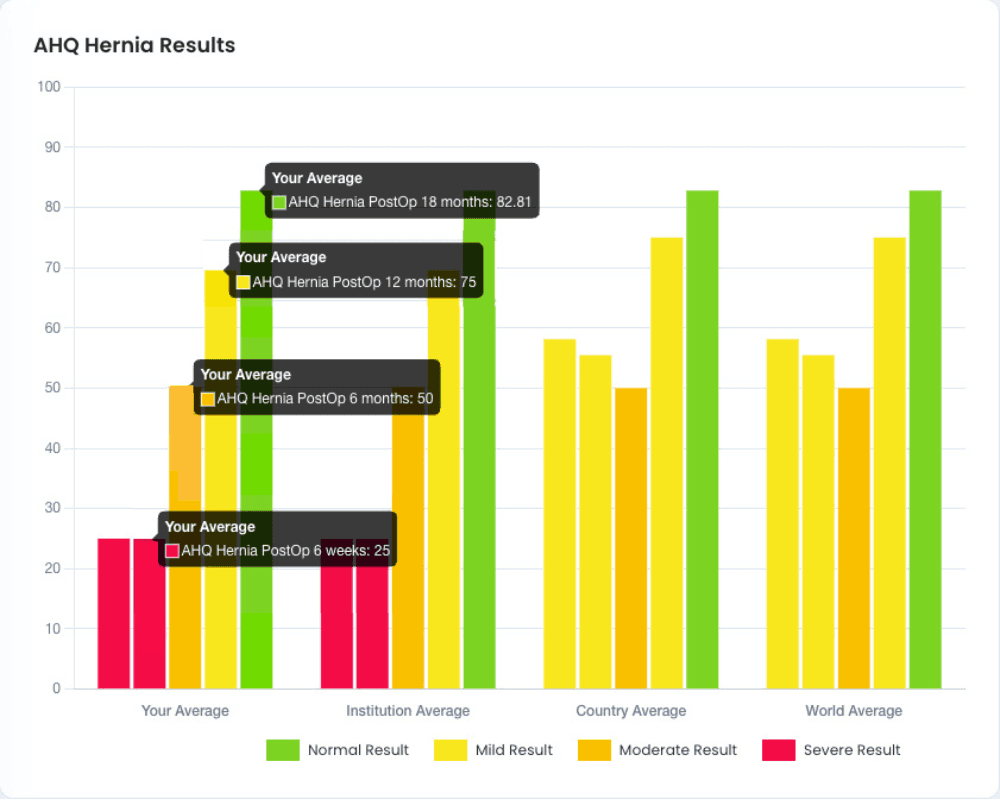
AHQ (Abdominal Hernia-Q)

A validated instrument developed through the Abdominal Core Health Quality Collaborative (AHSQC), completed by thousands of patients, providing insight into pain, function, and quality of life before and after hernia repair.

PGI-I (Patient Global Impression of Improvement)

A simple, validated measure widely used across surgical and medical specialties to assess patients’ perceived improvement following treatment.

Patient Satisfaction Score

A direct, patient-centred measure of whether the surgery met the patient’s expectations, crucial in hernia and every surgery, where quality-of-life improvement is often the primary outcome.

Together, PROMS give surgeons a structured, meaningful view of how their patients actually feel after surgery, not just whether they experienced complications.

Try SurgicalPerformance for Free

If you are a general surgeon performing hernia repairs, you can trial SurgicalPerformance immediately

Enter up to 10 cases obligation-free, experience automated PROMS, and explore your personalised INSIGHTS.

Your patients gain a voice.

You gain clarity.

And together, we raise the standard of hernia care.

Hernia surgery is a unique part of surgical practice. It is rarely lifesaving, unlike cancer surgery, but it is deeply tied to restoring a patient’s comfort, function and quality of life. Many patients present with straightforward hernias, while others are referred because of complexity: recurrent hernias, large abdominal wall defects or prior failed repairs. And yet, regardless of complexity, what these patients want most is to feel “normal” again.

As surgeons, we all know that collecting outcomes data sounds simple in theory but can be a painful, time-consuming and easily neglected task in reality. Entering cases, keeping track of follow-up and consolidating outcomes can feel like another administrative burden added to an already overloaded day. This is exactly where technology should be helping us, not becoming another bloody chore.

Why Functional Outcomes Matter as Much as Clinical Outcomes

Hernia repair is one of the most commonly performed operations worldwide, and in Australia alone, over 90,000 hernia repairs are performed each year1

But what matters most to patients is not just the absence of complications - it’s whether they feel better.

Research consistently shows that functional, patient-reported outcomes (pain, discomfort, activity limitations and overall wellbeing) are often more meaningful to patients than purely clinical indicators2.

“One of the worst things you can do as a doctor is to abandon a patient”.

Many patients recover beautifully and are grateful for the improvement in their daily life. But sometimes, patients don’t do as well as expected. And if surgeons aren’t aware of their postoperative experience, we lose the opportunity to intervene early and learn from our results.

It’s human nature to avoid difficult situations. Some surgeons understandably feel reluctant to engage with dissatisfied patients when no clear surgical solution exists. But attributing persistent symptoms to “psychological factors” does not help these patients and doesn’t help us understand the full scope of outcomes after hernia repair.

The default approach becomes familiar:

Perform the repair → see them at 6 weeks → if they're not 100%, hope things settle → discharge.

But this model leaves significant blind spots.

What We Lose When We Don’t Track Patient Outcomes

Without structured follow-up, surgeons miss critical insights:

  • How many patients are truly satisfied postoperatively?

  • How many continue to experience pain, discomfort, or functional limitations?

  • Despite a complication-free course, how many patients still rate their improvement as poor or only moderate?

Studies suggest that chronic postoperative pain affects around 10–12% of patients after inguinal hernia repair, even in the modern mesh era3 4.

In practical terms, this means that each year in Australia alone, 5,000 patients continue to experience chronic groin pain after inguinal hernia repair—despite technically successful surgery, highlighting the importance of tracking outcomes beyond the traditional snapshot of a single clinic visit.

SurgicalPerformance: A Platform Built by Surgeons, for Surgeons

SurgicalPerformance is not a registry. There is:

  • no college or society governing it

  • no reporting mandates

  • no hierarchy

  • no consequences for poor outcomes

  • no obligation to participate

Just a simple mission: to give surgeons a private, supportive, data-driven way to understand their outcomes and learn from their own experience.

SurgicalPerformance is a community of surgeons who believe that outcomes tracking should be useful, not punitive.

Purpose-Built PROMs for Hernia Surgery

To support surgeons who perform hernia repairs, SurgicalPerformance, through collaboration with expert general surgeons, has incorporated validated and hernia-specific Patient-Reported Outcome Measures (PROMs) that are automatically delivered to patients at the right intervals.

These include:

AHQ (Abdominal Hernia-Q)

A validated instrument developed through the Abdominal Core Health Quality Collaborative (AHSQC), completed by thousands of patients, providing insight into pain, function, and quality of life before and after hernia repair.


PGI-I (Patient Global Impression of Improvement)

A simple, validated measure widely used across surgical and medical specialties to assess patients’ perceived improvement following treatment.

Patient Satisfaction Score

A direct, patient-centred measure of whether the surgery met the patient’s expectations, crucial in hernia and every surgery, where quality-of-life improvement is often the primary outcome.

Together, PROMS give surgeons a structured, meaningful view of how their patients actually feel after surgery, not just whether they experienced complications.

Try SurgicalPerformance for Free

If you are a general surgeon performing hernia repairs, you can trial SurgicalPerformance immediately

Enter up to 10 cases obligation-free, experience automated PROMS, and explore your personalised INSIGHTS.

Your patients gain a voice.

You gain clarity.

And together, we raise the standard of hernia care.

SurgicalPerformance is a confidential online platform, built for surgeons by surgeons, to help you ‘know better’.

SurgicalPerformance is a confidential online platform, built for surgeons by surgeons, to help you ‘know better’.

SurgicalPerformance is a confidential online platform, built for surgeons by surgeons, to help you ‘know better’.