

SURGEON SPOTLIGHT
Follow-up with purpose — using PROMS to reveal hidden care gaps
SURGEON SPOTLIGHT
Follow-up with purpose — using PROMS to reveal hidden care gaps
SURGEON SPOTLIGHT
Follow-up with purpose — using PROMS to reveal hidden care gaps
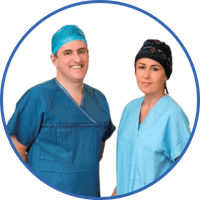
Shirley Lockie
Speciality
Nurse Practitioner & Surgical Assistant
Location
Dr Phil Lockie’s Rooms Brisbane, Aus
PROMS don’t just tell us how surgery went, they show us where patients need more care, even when everything looks fine on paper.
Shirley Lockie
Speciality
Nurse Practitioner & Surgical Assistant
Location
Dr Phil Lockie’s Rooms Brisbane, Aus
PROMS don’t just tell us how surgery went, they show us where patients need more care, even when everything looks fine on paper.
Shirley Lockie
Speciality
Nurse Practitioner & Surgical Assistant
Location
Dr Phil Lockie’s Rooms Brisbane, Aus
PROMS don’t just tell us how surgery went, they show us where patients need more care, even when everything looks fine on paper.
CHALLENGE
Knowing outcomes isn’t enough, understanding recovery is critical
Shirley plays a central role in a busy general and bariatric surgery practice, managing patient triage, peri-operative care, and a dedicated metabolic clinic. With over 20 years of experience, as a surgical assistant, she understands that surgical success doesn’t end at discharge, it continues through recovery, rehabilitation, and follow-up.
Despite strong clinical outcomes, patient engagement post-surgery remained a challenge. Like many practices, Shirley found that patients were often slow to raise concerns, uncertain about whether symptoms were “normal,” or disengaged from follow-up questionnaires altogether. Some patients assumed electronic questionnaires were spam, leading to lower response rates and missed opportunities for early intervention.
But while these requirements were essential, they came with a cost. Traditional systems for managing surgical records were often time-consuming, paper-based, or disconnected from day-to-day clinical workflows. For an experienced specialist juggling full surgical lists, teaching responsibilities, and ongoing patient care, the idea of adding more administrative tasks was simply unsustainable.
CHALLENGE
Knowing outcomes isn’t enough, understanding recovery is critical
With more than two decades of surgical experience, Dr. Petra Ladwig understood the importance of maintaining accurate records and meeting professional obligations. Over the years, she had witnessed the growing expectations around audit compliance and CPD reporting and the increasing demand for surgeons to back their expertise with structured data.
But while these requirements were essential, they came with a cost. Traditional systems for managing surgical records were often time-consuming, paper-based, or disconnected from day-to-day clinical workflows. For an experienced specialist juggling full surgical lists, teaching responsibilities, and ongoing patient care, the idea of adding more administrative tasks was simply unsustainable.
CHALLENGE
Knowing outcomes isn’t enough, understanding recovery is critical
Shirley plays a central role in a busy general and bariatric surgery practice, managing patient triage, peri-operative care, and a dedicated metabolic clinic. With over 20 years of experience, as a surgical assistant, she understands that surgical success doesn’t end at discharge, it continues through recovery, rehabilitation, and follow-up.
Despite strong clinical outcomes, patient engagement post-surgery remained a challenge. Like many practices, Shirley found that patients were often slow to raise concerns, uncertain about whether symptoms were “normal,” or disengaged from follow-up questionnaires altogether. Some patients assumed electronic questionnaires were spam, leading to lower response rates and missed opportunities for early intervention.
But while these requirements were essential, they came with a cost. Traditional systems for managing surgical records were often time-consuming, paper-based, or disconnected from day-to-day clinical workflows. For an experienced specialist juggling full surgical lists, teaching responsibilities, and ongoing patient care, the idea of adding more administrative tasks was simply unsustainable.

The practice operates across multiple private hospital sites, each with different theatre schedules and ward environments. While no major clinical issues had been identified, there was limited visibility into how recovery experiences compared between sites, particularly for emergency patients, who often require closer post-operative monitoring.
Without a structured, centralised way to capture patient-reported outcomes, subtle patterns in recovery, ward-level support, and post-discharge care risked going unnoticed.
The practice operates across multiple private hospital sites, each with different theatre schedules and ward environments. While no major clinical issues had been identified, there was limited visibility into how recovery experiences compared between sites, particularly for emergency patients, who often require closer post-operative monitoring.
Without a structured, centralised way to capture patient-reported outcomes, subtle patterns in recovery, ward-level support, and post-discharge care risked going unnoticed.
The practice operates across multiple private hospital sites, each with different theatre schedules and ward environments. While no major clinical issues had been identified, there was limited visibility into how recovery experiences compared between sites, particularly for emergency patients, who often require closer post-operative monitoring.
Without a structured, centralised way to capture patient-reported outcomes, subtle patterns in recovery, ward-level support, and post-discharge care risked going unnoticed.
SOLUTION
Purposeful PROMS tracking across all patient groups
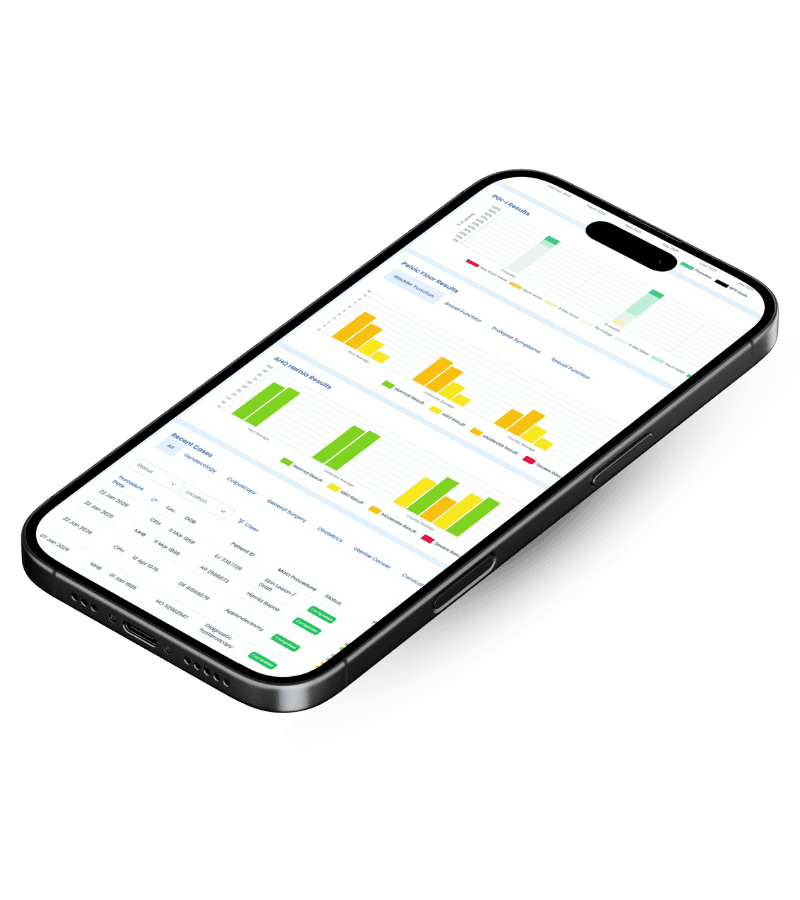
Shirley implemented PROMS across every patient cohort, including bariatric, general surgery, hernia, and emergency cases. PROMS links are sent via SMS following patient acceptance and reinforced during peri-operative conversations, helping patients understand why their feedback matters.
Patients are automatically followed up, with Shirley actively monitoring responses and reminders sent through practice software to encourage completion. Training from the SurgicalPerformance team ensured the workflow was embedded smoothly into daily practice.
Importantly, PROMS weren’t treated as a passive data collection exercise. They became an active clinical tool, guiding follow-up, prioritising outreach, and shaping how care was delivered after discharge.
We’re not just following up because we should — we’re following up with purpose.
SOLUTION
Purposeful PROMS tracking across all patient groups
Shirley implemented PROMS across every patient cohort, including bariatric, general surgery, hernia, and emergency cases. PROMS links are sent via SMS following patient acceptance and reinforced during peri-operative conversations, helping patients understand why their feedback matters.
Patients are automatically followed up, with Shirley actively monitoring responses and reminders sent through practice software to encourage completion. Training from the SurgicalPerformance team ensured the workflow was embedded smoothly into daily practice.
Importantly, PROMS weren’t treated as a passive data collection exercise. They became an active clinical tool, guiding follow-up, prioritising outreach, and shaping how care was delivered after discharge.
We’re not just following up because we should — we’re following up with purpose.
SOLUTION
Purposeful PROMS tracking across all patient groups
Shirley implemented PROMS across every patient cohort, including bariatric, general surgery, hernia, and emergency cases. PROMS links are sent via SMS following patient acceptance and reinforced during peri-operative conversations, helping patients understand why their feedback matters.
Patients are automatically followed up, with Shirley actively monitoring responses and reminders sent through practice software to encourage completion. Training from the SurgicalPerformance team ensured the workflow was embedded smoothly into daily practice.
Importantly, PROMS weren’t treated as a passive data collection exercise. They became an active clinical tool, guiding follow-up, prioritising outreach, and shaping how care was delivered after discharge.
We’re not just following up because we should — we’re following up with purpose.
Results: Clear insights into recovery, care quality & where to act

Emergency patients consistently required the most follow-up care

Bariatric patients were recovering exceptionally well

Hernia patients were largely progressing as expected
Most notably, Shirley identified patients with the same operation raised concerns at different locations. Patients treated at a lower-volume surgical site consistently raised more post-operative questions than those treated at a higher-volume site. While no severe adverse events were identified, PROMs highlighted several areas that prompted timely clinical follow-up, including same-day phone calls and in-person reviews.
Whilst nothing life threatening, the recovery was different enough that we could intervene earlier and support patients better.
These insights helped the practice understand that recovery experiences can vary significantly depending on the care environment, even when surgical technique and surgeons remain the same.
Results: Clear insights into recovery, care quality & where to act
Emergency patients consistently required the most follow-up care
Bariatric patients were recovering exceptionally well
Hernia patients were largely progressing as expected
Most notably, Shirley identified patients with the same operation raised concerns at different locations. Patients treated at a lower-volume surgical site consistently raised more post-operative questions than those treated at a higher-volume site. While no severe adverse events were identified, PROMs highlighted several areas that prompted timely clinical follow-up, including same-day phone calls and in-person reviews.
Whilst nothing life threatening, the recovery was different enough that we could intervene earlier and support patients better.
These insights helped the practice understand that recovery experiences can vary significantly depending on the care environment, even when surgical technique and surgeons remain the same.
Results: Clear insights into recovery, care quality & where to act
Emergency patients consistently required the most follow-up care
Bariatric patients were recovering exceptionally well
Hernia patients were largely progressing as expected
Most notably, Shirley identified patients with the same operation raised concerns at different locations. Patients treated at a lower-volume surgical site consistently raised more post-operative questions than those treated at a higher-volume site. While no severe adverse events were identified, PROMs highlighted several areas that prompted timely clinical follow-up, including same-day phone calls and in-person reviews.
Whilst nothing life threatening, the recovery was different enough that we could intervene earlier and support patients better.
These insights helped the practice understand that recovery experiences can vary significantly depending on the care environment, even when surgical technique and surgeons remain the same.
THEY LOVE
Favourite features.
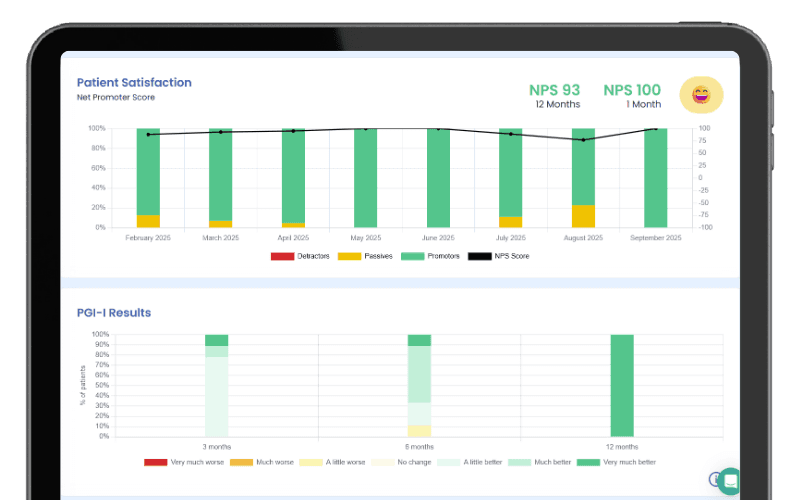
Red flag alerts highlighting patients who need immediate follow-up
Trend visibility across hospital environments
Structured follow-up intervals across validated surveys
Scalable workflows across bariatric and general surgery
Data-backed insights to inform audits, education, and care improvement
THEY LOVE
Favourite features.
Red flag alerts highlighting patients who need immediate follow-up
Trend visibility across hospital environments
Structured follow-up intervals across validated surveys
Scalable workflows across bariatric and general surgery
Data-backed insights to inform audits, education, and care improvement
THEY LOVE
Favourite features.
Red flag alerts highlighting patients who need immediate follow-up
Trend visibility across hospital environments
Structured follow-up intervals across validated surveys
Scalable workflows across bariatric and general surgery
Data-backed insights to inform audits, education, and care improvement
SUBSCRIBE
TODAY
Join the growing cohort of surgeons who now KnowBetter_
MONTHLY
SUBSCRIPTION
$
95
USD
YEARLY
SUBSCRIPTION
Save 5% with an Annual Subscription
SUBSCRIBE
TODAY
Join the growing cohort of surgeons who now KnowBetter_
MONTHLY
SUBSCRIPTION
$
95
USD
YEARLY
SUBSCRIPTION
Save 5% with an Annual Subscription
SUBSCRIBE
TODAY
Join the growing cohort of surgeons who now KnowBetter_
MONTHLY
SUBSCRIPTION
$
95
USD
YEARLY
SUBSCRIPTION
Save 5% with an Annual Subscription

SurgicalPerformance is a confidential online platform, built for surgeons by surgeons, to help you ‘know better’.

SurgicalPerformance is a confidential online platform, built for surgeons by surgeons, to help you ‘know better’.
SurgicalPerformance is a confidential online platform, built for surgeons by surgeons, to help you ‘know better’.